Coasts
The Windward Road, Driven at Fifteen Miles an Hour
Two days on the wet side of the island with no reservations and no schedule, learning that the road is the destination and the pullouts are the itinerary.
June 18, 2026 / Windward Oahu / Early summer / 9 min
Filed under
Coasts
Written by
Marin Krueger
Published
June 18, 2026
An independent journal with nothing for sale. No booking is taken here, no money changes hands, and no carrier, hotel group or reservation service has any connection to what appears on these pages.
You can drive the windward coast of Oahu in ninety minutes. I have done it that way, years ago, in a rented car with the air conditioning on and a dinner reservation waiting at the other end, and I remember almost none of it. This June I gave the same road two days, stopped whenever anything asked me to, and came back with more than I have from trips that lasted a fortnight.
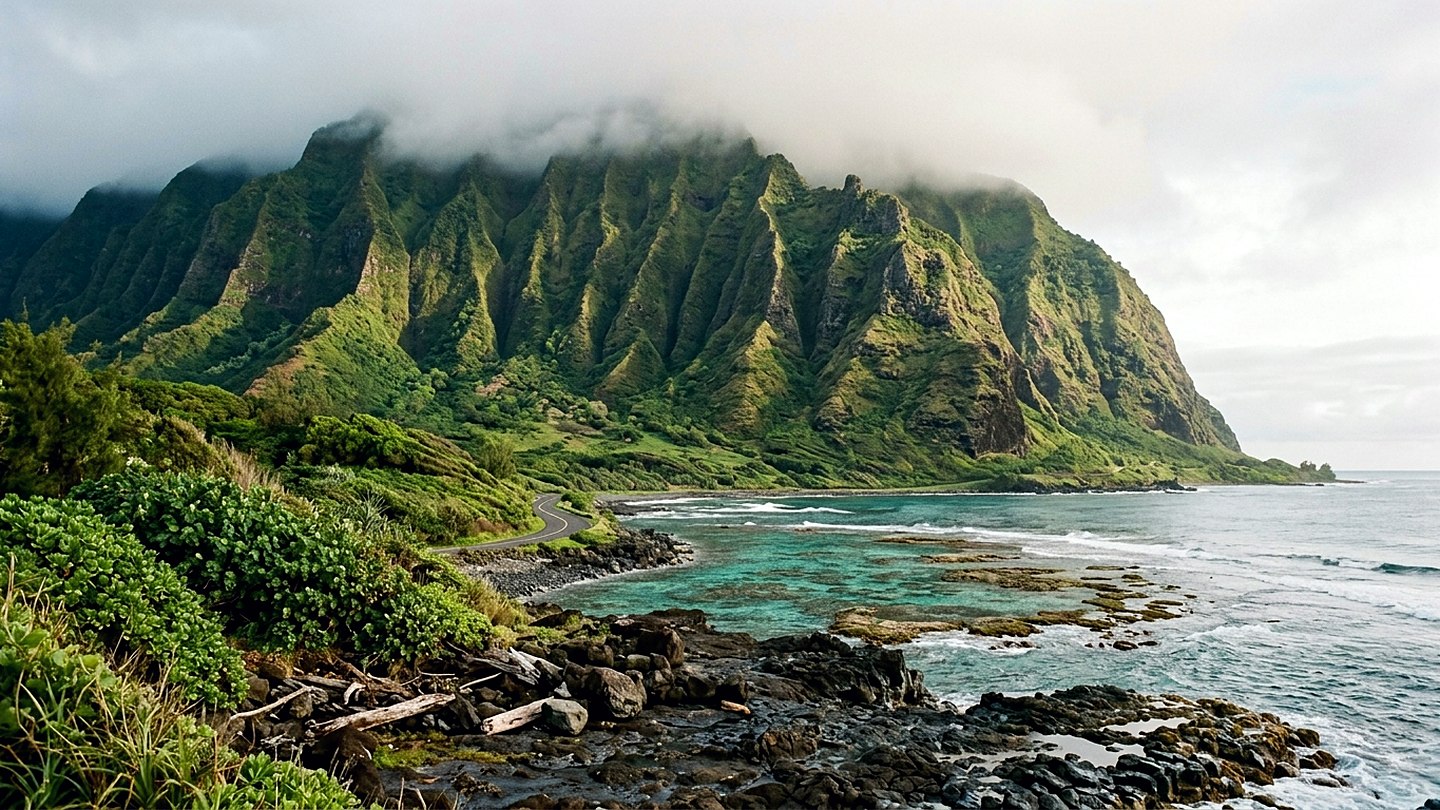
The premise is simple enough. The windward side is the wet side. Trade winds come in off open ocean, hit a wall of eroded volcanic rock, and drop their water on the way up. What that produces is a coastline where the mountains stand almost vertically about a mile inland, the flat ground between them and the sea is narrow and green, and a two lane road threads the whole thing at the speed of a bicycle if you let it. Nothing about it is secret. Everything about it rewards patience, and almost nobody gives it any.
Starting late on purpose
I left town at half past six, which on this island is not early, and was on the coast road by seven. That first hour is the one I would protect if I could only keep one. The light comes over the water from behind you and lands flat on the cliffs, and for about two hours the fluting on those walls is legible: hundreds of vertical grooves cut by water over a few million years, each one holding its own thin shadow. By eleven the sun is overhead, the grooves flatten out, and the same mountain reads as a green mass with no detail in it at all.
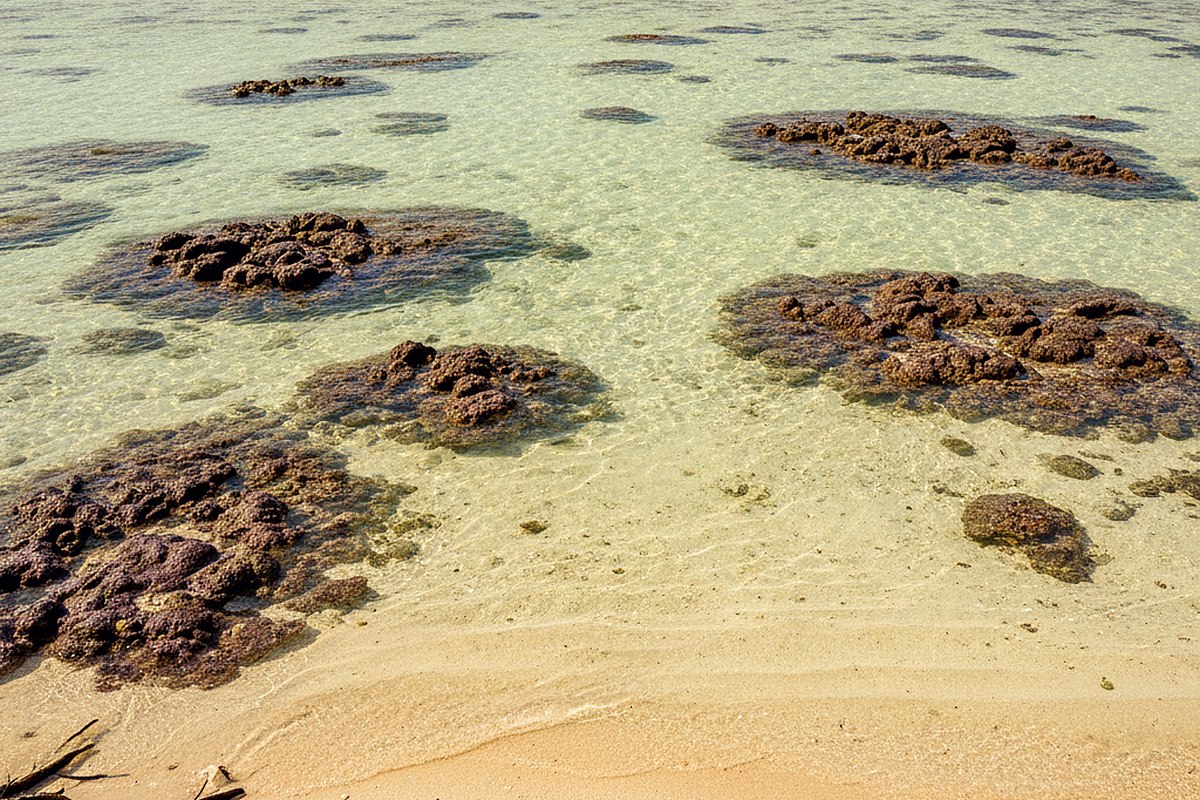
I had no plan beyond that. No booking, no list of stops, nothing marked on a map. I told myself I would drive until something looked worth twenty minutes and then give it twenty minutes. The first thing was a gravel pullout with room for three cars and a gap in the ironwoods, and through the gap the reef flat went out maybe four hundred yards before the water changed color and dropped away. Low tide. The whole shelf was pale and readable, dark coral heads scattered through it like handwriting.
I stayed an hour.
The road is not the way to the view. On this coast the road is the view, and every pullout is an argument for stopping again.
What the tide does to the day
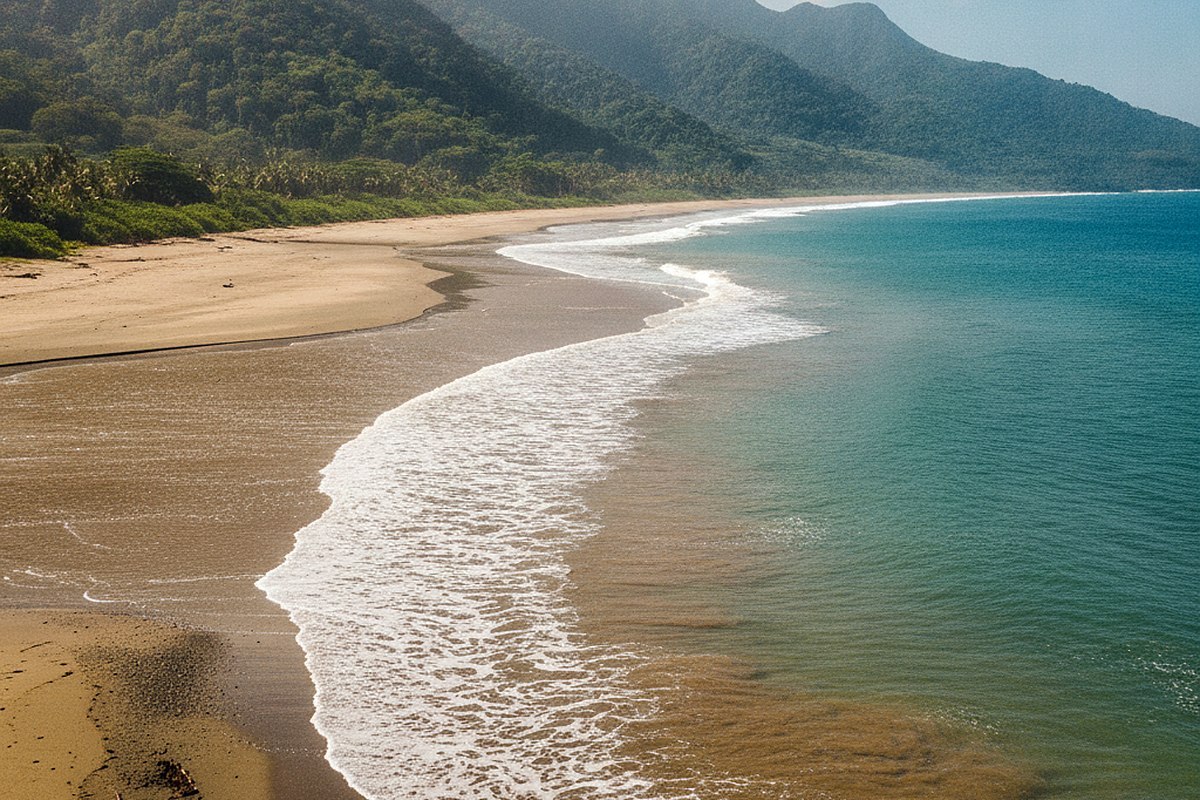
On a coast like this the tide table matters more than any opening time. At low water the reef flats become walkable in places and legible everywhere, and the color separates into bands you can count: white sand, pale green shallows, the darker channel, then blue. At high water the same view is a single blue plane with surf on it. Both are worth looking at. Only one of them shows you how the coast is built.
I had checked the tables before leaving and knew the low would fall late morning on the first day and around midday on the second, which is why I put the reef stops in the middle of each day and the mountain stops at the ends. That is the entire planning method, and it took four minutes. It is also the only thing I did on this trip that I would call a technique.
A word about walking out onto a reef flat, since it is the sort of thing people do without thinking. It is a living surface, it is sharp, and it does not want your feet on it. Where there is sand between the coral I walked. Where there was not, I stayed on the beach and used a longer lens. Local signage is worth reading and local advice is worth taking, and when a place is posted as closed to entry it is closed for a reason that will outlast my visit.
The middle of the day is for the flats
Somewhere in the second hour I stopped trying to get anywhere. This is the part of a slow drive that always surprises me: the shift is not gradual, it happens all at once, usually after the third or fourth stop, and after it happens the day stops having a destination in it.
The beach parks along this stretch are public, free, mostly shaded by ironwood, and almost empty on a weekday morning. Each one is the same idea executed slightly differently: a strip of sand, a few picnic tables, showers, and a view out to whatever the reef is doing in front of it. I ate lunch at one of them out of a paper bag from a roadside place I had passed twenty minutes earlier and would not have found on a schedule. Two people were fishing off the point. A dog with a serious job to do patrolled the tideline. That was the whole afternoon.
What I noticed, sitting there for two hours instead of ten minutes, is how much the water changes while you are not looking at it. The wind picked up around one and the surface went from glass to hammered metal. The color shifted with it, from a green you could see the bottom through to a harder blue that gave nothing back. Cloud came over the mountains behind me at about the same time and the whole coast dropped two stops of light in the space of a minute. If I had been driving I would have registered none of it.
The cliffs, and the hour they belong to
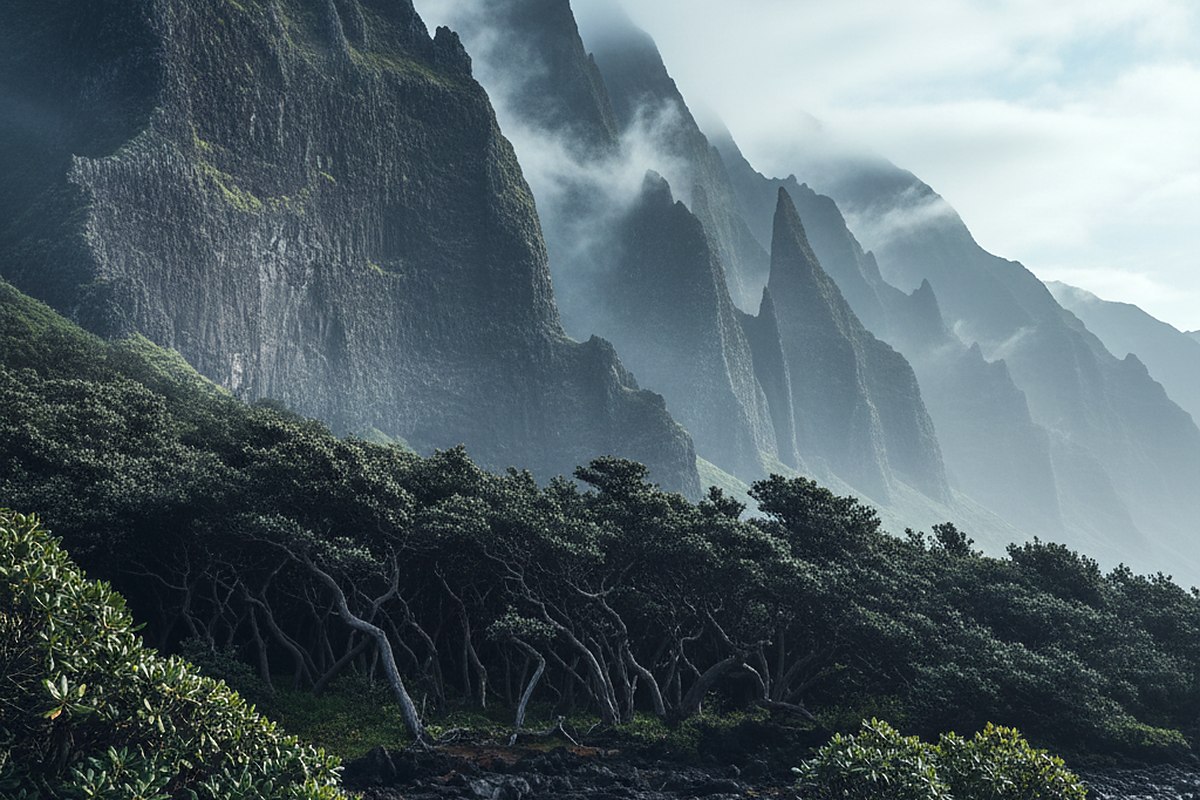
The second morning I got up before light and drove twenty minutes north to a stretch where the wall comes closest to the road. I have photographed this coast badly many times. The mistake is always the same: arriving in the middle of the day, when the sun is behind the ridge or straight overhead, and the cliff face is either a silhouette or a flat green nothing.
At quarter past seven the cloud was sitting on the top third of the wall and moving, and the light was coming in low from over the water. What that combination does is separate the ridge into planes. The nearest spur is bright and sharp, the one behind it is a shade cooler, and by the fourth or fifth ridge the whole thing has gone to pale blue vapor. It looks like a stage set with too many flats in it. I stood in one place for fifty minutes and made maybe eighteen frames, nearly all of them the same composition, waiting for the cloud to sit exactly where I wanted it.
That is the honest content of a morning like this. Not exploration. Standing still, and being willing to wait for weather to arrange itself.
Practical notes, kept short
There is no trick to this coast. A car is the only realistic way to work it at your own pace, and the road is well surfaced and slow by nature. Fill the tank before you start, because stations thin out and you will be doing a lot of short hops with the engine cold. Take more water than you think, since the shade is deceptive and the trades dry you out. Cash is worth having for roadside food.
On the pullouts: use the ones with room. Some of them are simply a widening of the shoulder, and parking half on the road on a two lane coastal highway is a bad idea in any country. Where the shoulder is soft, do not test it. Several of the best views come with no pullout at all, and the correct response to that is to keep driving and take the next one.
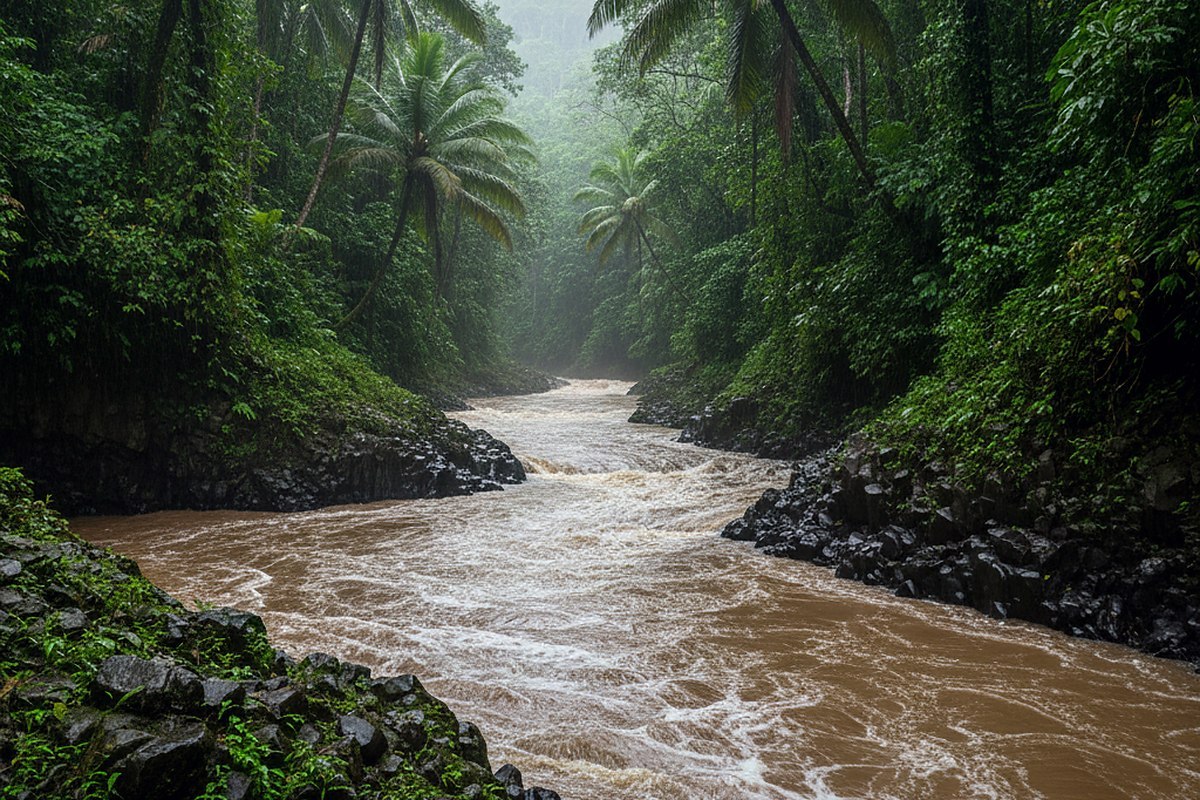
On the weather: it rains here. Not all day and usually not for long, but a shower will cross the road every few hours and the mountains are often in cloud. That is the reason the coast looks the way it does, so treating it as an inconvenience is a category error. Rain also produces the temporary waterfalls that stripe the wall an hour after a heavy shower, which is a sight worth chasing rather than sheltering from.
What I would change
I would give it three days instead of two, and I would spend the extra one going nowhere at all. The pattern that worked was mountains early, reef late morning, a long unearned sit through the afternoon, and back out for the last hour of light. That is a shape, not a schedule, and it held up on both days without me having to think about it.
The other change is smaller and matters more. On the second afternoon I put the camera in the bag and left it there for three hours. I have no photographs from that stretch and I remember it better than any other part of the trip: the wind coming through the ironwood needles with a sound like distant rain, a shift in the light I did not try to catch, and the specific way the reef edge kept breaking white in a line that never quite repeated. There is a version of this coast that only exists when you are not working, and two days is enough time to find it if you stop trying to bring it home.