Field notes
How to Read a Shoreline Before You Walk Onto It
Fifteen minutes of standing still and paying attention will tell you more about a piece of coast than an hour of walking around on it, and it costs nothing at all.
February 14, 2026 / Practised across the Pacific / Any / 8 min
Filed under
Field notes
Written by
Marin Krueger
Published
February 14, 2026
An independent journal with nothing for sale. No booking is taken here, no money changes hands, and no carrier, hotel group or reservation service has any connection to what appears on these pages.
I have a habit that costs nothing and that I now do automatically. Arriving at an unfamiliar piece of coast, before walking down onto it and long before getting near the water, I stand somewhere slightly above it and do nothing for fifteen minutes.
It looks like idleness. It is the single most useful thing I have learned in fifteen years of traveling to coastlines, and the whole method fits in a few paragraphs. I want to write it down properly, partly because I get asked, and partly because I keep meeting people on rocks where they should not be standing, doing something I did myself at twenty five and got away with.
Two things before the method. First, none of this replaces local knowledge, posted signs, or lifeguard advice: those come first, always, and if a place is signed as closed then the reading exercise is over. Second, this is about looking, not about testing anything. Nothing here involves getting closer to find out.
Start with the rock, because rock keeps records
Rock tells you where water has been, and it does not exaggerate.
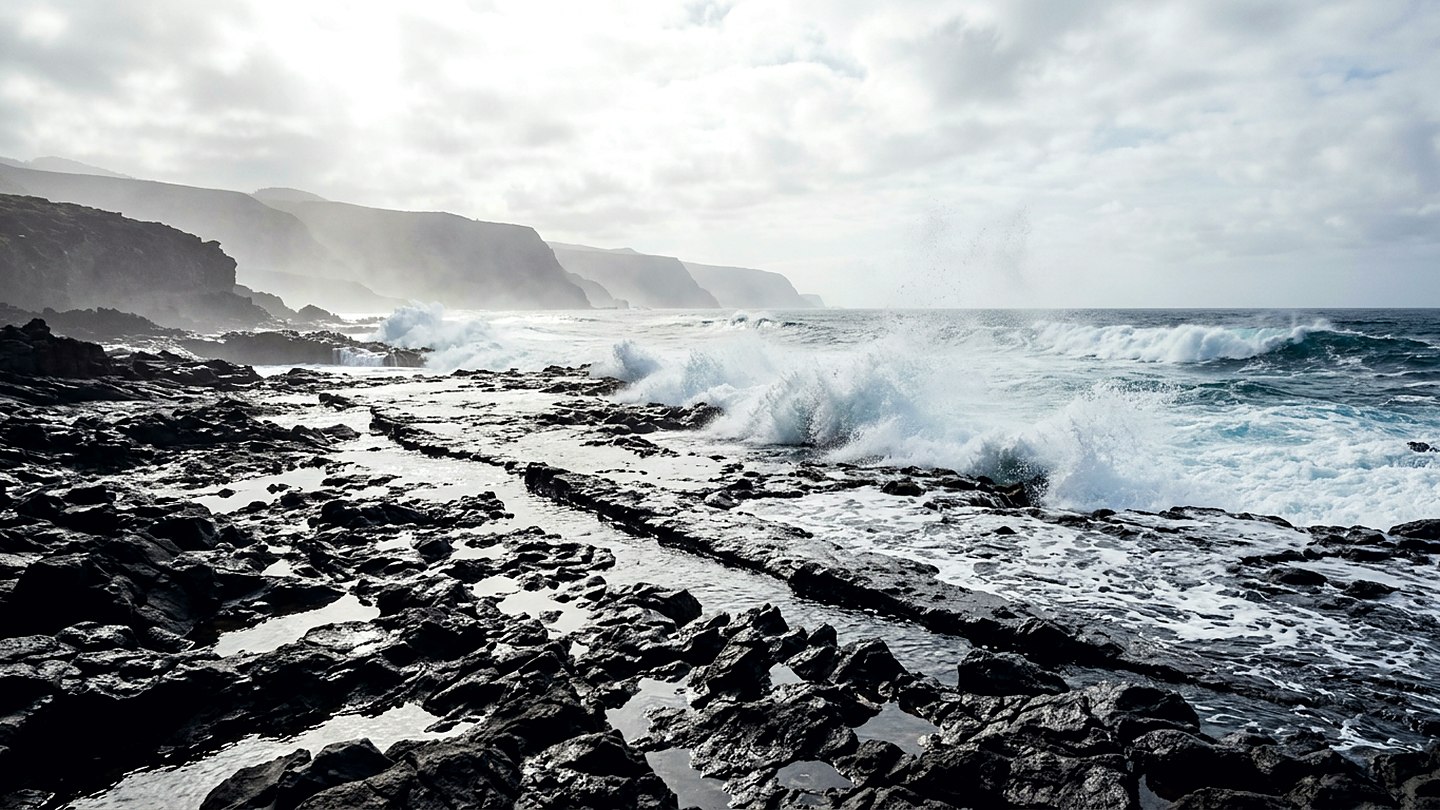
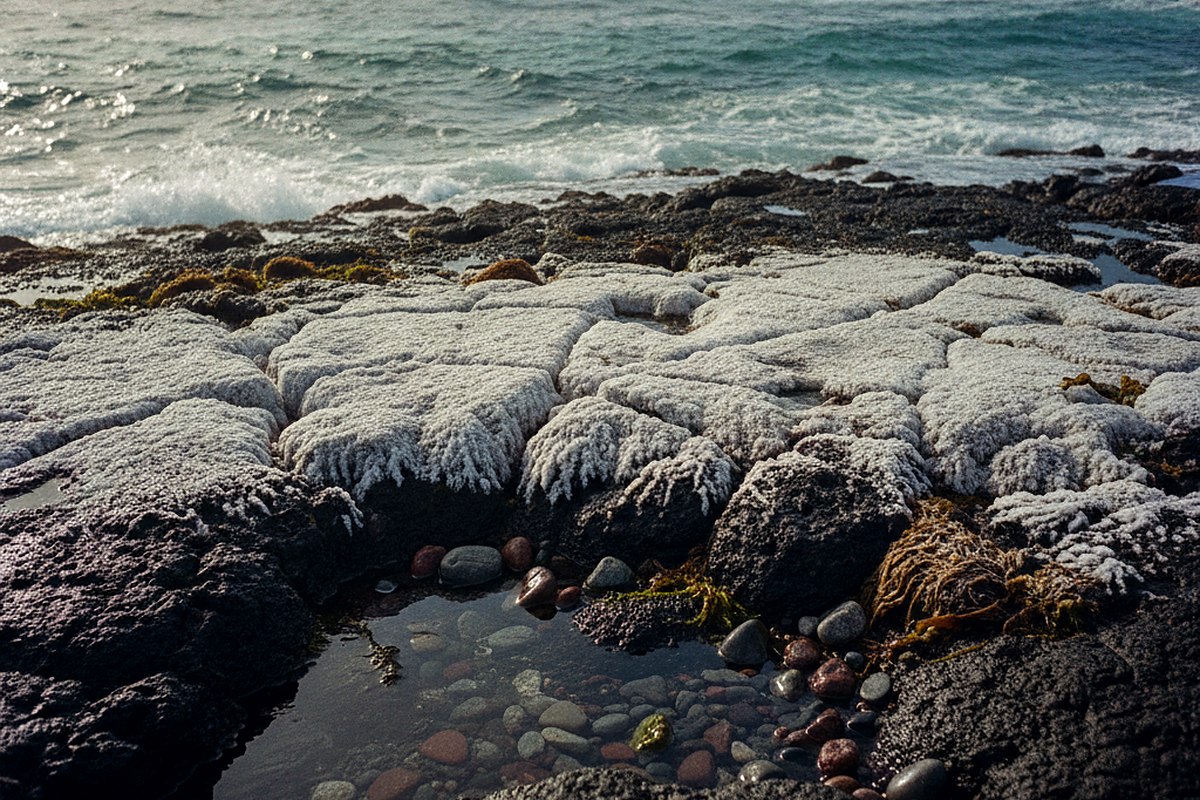
Look for the wet line. On any rocky shore there is a boundary between rock that is dark and wet and rock that is dry and often pale with dried salt. That boundary is not where the water usually reaches. It is where the water reached recently and repeatedly, which is a much bigger number than most people would guess from watching a few small waves.
Then look above it. Rock above the wet line often shows a second story: a band scoured cleaner than the dry rock further up, no lichen, no dust, sometimes small stones or weed left behind in cracks. That band is where the sea gets to on a bigger day, and any weed or debris sitting up there was put there by water within recent memory.
The rule I use is simple and I hold to it. If there is wet rock, salt scour or stranded debris above where I am thinking of standing, then I am standing in the water's territory rather than on land that happens to be near water.
Then watch the water, and count
Waves do not arrive evenly. They come in groups, and the gap between the groups is what fools people, because the quiet spell after a set is exactly the moment a shoreline looks safe.
So I count. I watch for at least ten minutes and I count the waves in each set and the gaps between sets, and I keep watching until I have seen at least three sets. What I am looking for is not the average. I am looking for the biggest thing that arrived in the time I stood there, on the assumption that something bigger is available and simply did not turn up during my window.
While counting, three specific things are worth watching for.
The first is a wave that runs further up the rock or the sand than the ones before it, arriving without any visible warning. On many coasts these are irregular and they are the reason people get taken off ledges.
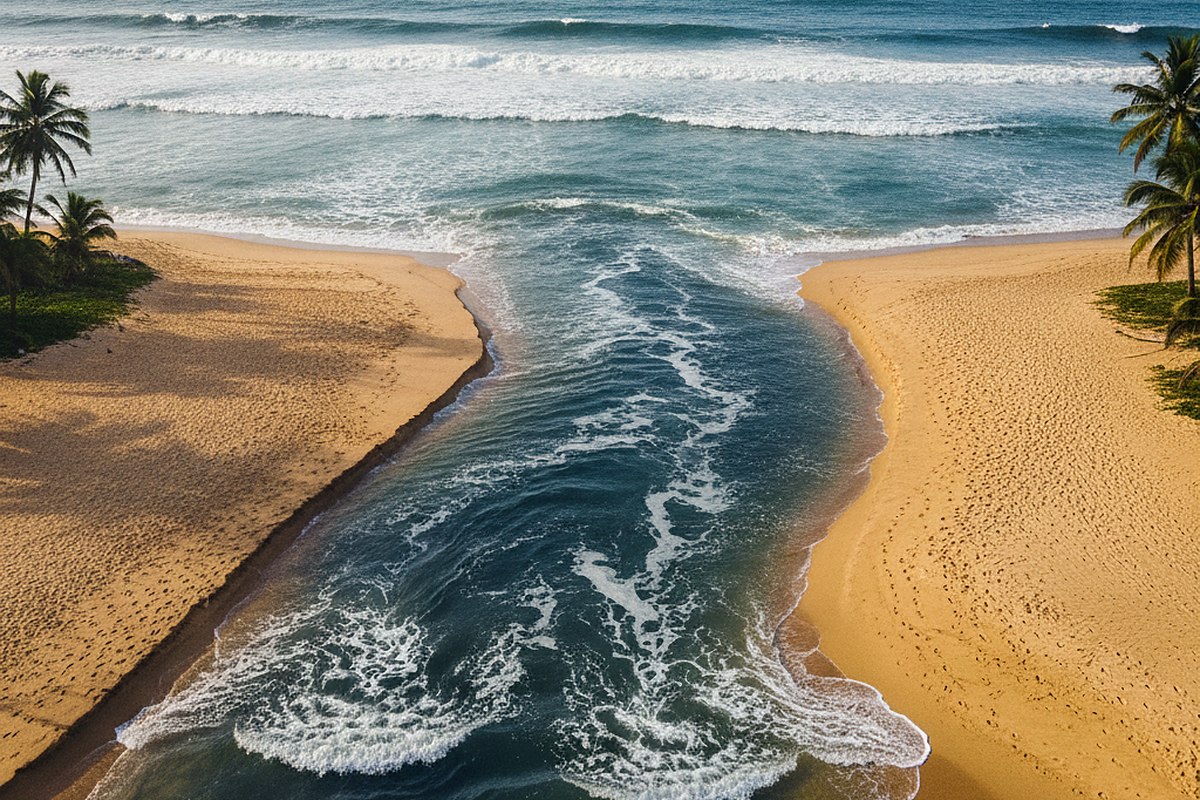
The second is water going out. On a beach, look for a stretch where the surf is not breaking, where the water surface is choppier or darker, and where foam or sediment is moving seaward in a lane. Water that comes in has to leave, and where it leaves is a current, whatever anyone calls it.
The third is the sound. A shoreline that thumps rather than hisses is telling you there is depth close in and force behind it. It is a surprisingly reliable signal, and you can hear it from the car park.
Read the beach as a shape
Sand has a shape and the shape is information.
A beach with a steep face and a distinct step at the waterline, where waves are collapsing rather than rolling, has deep water close in and a strong pull back down that face. A beach that shelves gently, where the white water runs a long way up in a thin sheet, is a different animal entirely.
Look at the ends. Where a sandy beach meets rock at either end, water tends to move along the beach and out at those corners. Look at the middle. A gap in the line of breakers, and a channel of darker water leading offshore from it, is worth taking as seriously as any sign.
Look at what has been left. A line of dried weed, small pumice, and plastic tells you the reach of the last high tide. Two lines tell you the reach of the last two, and if the upper one is much further up the beach, that is what this place can do when it is not being gentle.
The three questions I finish with
After fifteen minutes I answer three questions before doing anything else.
Where is the water's ground and where is mine. This is the wet line, the scour band, and the debris line, taken together. Everything below is the sea's.
What is the biggest thing I saw, and can I be certain nothing bigger is coming. The answer to the second half is always no, which is the point. The plan has to survive something larger than what I watched.
If I got wet here, where would I end up. Not a comfortable question. On a rock shelf with a shore break, the honest answer is often that there is no easy way back up, and that alone rules a lot of places out.
What this method is not
It is not expertise. I am a visitor on every coast I write about, and fifteen minutes of watching does not make me a local. It is a way of catching the obvious, and the obvious catches out a lot of people, including me twice.
It is also not a substitute for the two things that actually keep people safe on unfamiliar water, which are asking someone who knows, and choosing a beach with lifeguards when you intend to swim. Signage exists here because incidents happened here. Every closed access is a decision somebody made with more information than I have.
Why it changes the trip and not just the safety
The unexpected part is that this habit made me a better traveler in ways that have nothing to do with risk.
Fifteen minutes of standing still at the start of a place is fifteen minutes of actually looking at it. In that window I notice things I would otherwise walk straight past: where the birds are working, which way the wind is actually blowing rather than which way it feels, how the light will move over the next hour, where the frame is. Half of the photographs I care about came out of that quarter of an hour rather than out of the walking around that followed.
There is a version of arriving at a place where you get out of the car, walk down, and start doing things. And there is a version where you stop at the top, watch for a while, and let the coast tell you what it does. The second version costs a quarter of an hour and gives back the rest of the day.